

Motivating and easy-to-follow app. I like it 🙂
★★★★★
Because the secret to digestive comfort isn't just what you eat, but how you move afterward.
From bloating and heartburn to sluggishness and cramping, an alarming 43% of the UK population experience digestive discomfort[1]. While what we eat certainly plays a role, it's only part of the story. How we move after meals, and even the environment we're in, can shape how our digestive system responds.
It's true what they say: your body is a temple. It reacts not just to the foods we choose, but to the rhythm of activity around each meal. A gentle post-meal walk can be the difference between feeling weighed down or feeling light, and the right surroundings can be just as important as what's on your plate.
By understanding which foods support digestion, we can better navigate these everyday experiences. From fibre-rich staples to soothing bites, knowing how to fuel your body, and how to move afterward, lays the groundwork for a more comfortable, balanced day.

Deborah explains: "Eating sets off a chain of events inside our body, otherwise known as the digestive process. When we eat, the food is broken down into other substances that our bodies can absorb and use. From this point, enzymes and stomach acids start digesting it further, while your muscles, hormones, and nervous system work together to move it along the digestive tract. This combination ensures our bodies can extract the nutrients and energy we need.
"How efficiently this happens depends not only on what you eat, but also on how your body moves, rests, and reacts in the minutes afterward. Certain foods are particularly gentle on the digestive system and can help meals pass more comfortably."
These are grouped into four main categories:
Probiotic powerhouses
Fermented foods like yoghurt, kefir, kimchi, sauerkraut, miso, and tempeh introduce
beneficial bacteria to the gut, supporting nutrient absorption and helping to reduce bloating.
Deborah continues: "Fermented foods help maintain a healthy gut microbiome, supporting digestion and helping food move through the digestive system more smoothly."
High-fibre engines
Whole grains, brown rice, oats, beans, lentils, flaxseed, and chia seeds support regular bowel movements and feed
healthy gut bacteria.
Deborah explains: "Fibre acts like a gentle broom for your digestive system. Adding it gradually and pairing it with enough water helps prevent bloating and supports regular bowel movements."
Natural soothers
Ginger, peppermint, papaya, pineapple, and fennel contain compounds that can calm the stomach and ease mild bloating.
Deborah continues: "Certain herbs and fruits provide natural enzymes or anti-inflammatory compounds that help relax the digestive tract and reduce discomfort."
Nutrient-dense produce and healthy fats
Fruits like berries, apples, bananas, and vegetables such as spinach, kale, and zucchini provide fibre, vitamins, and minerals without overloading the stomach. Healthy fats and proteins such as salmon, avocado,
and eggs offer steady energy and gentle satiety.
"Combining nutrient-rich produce with healthy fats and proteins helps the body digest efficiently while keeping energy levels balanced," says Deborah.
It's important to remember that digestion is highly individual. What feels gentle and comfortable for one person may cause discomfort for another. Even foods that are generally considered gut-friendly can trigger bloating or sluggishness in some, so tuning in to your body's signals is the best approach.
That said, one recommendation that works for everyone to support digestion after a meal: avoid lying down immediately. Doing so can slow the digestive process and increase the risk of bloating. Staying upright gives your body the best chance to process your meal comfortably.
Gentle walking after a meal helps your body process food more efficiently. But where you walk matters just as much. Green and blue spaces, like parks, coastal paths, or riversides, help lower stress and activate your body's "rest and digest" mode.
In fact, studies have shown a strong link between reduced stress and improved digestive function, highlighting how calm, natural environments can help your body relax into digestion[2]. Here in the UK, we're fortunate to have a wide variety of these environments, from quiet parks to open countryside, right on our doorstep.
On the other hand, crowded, noisy areas can put your nervous system on alert, slowing digestion.
Deborah explains: "Digestion isn't just a mechanical process, it's also regulated by your nervous system and hormones. Being in a calm, low-stimulation environment helps your body feel safe and relaxed, which allows digestion to work more effectively.
"Quiet streets, parks, waterside areas, or even indoor spaces with fresh air circulation and soft lighting are all supportive environments. Simply walking in a calm setting after a meal can make food easier to process and help you feel more comfortable."
So, we know that where you walk matters. But which UK cities offer environments that naturally support post‑meal comfort? To find out, we analysed the 30 most populated UK cities to see which are best set up for post-meal movement, with each city being scored based on gut‑friendly environmental metrics including population density, air quality, average elevation, and green and blue space.
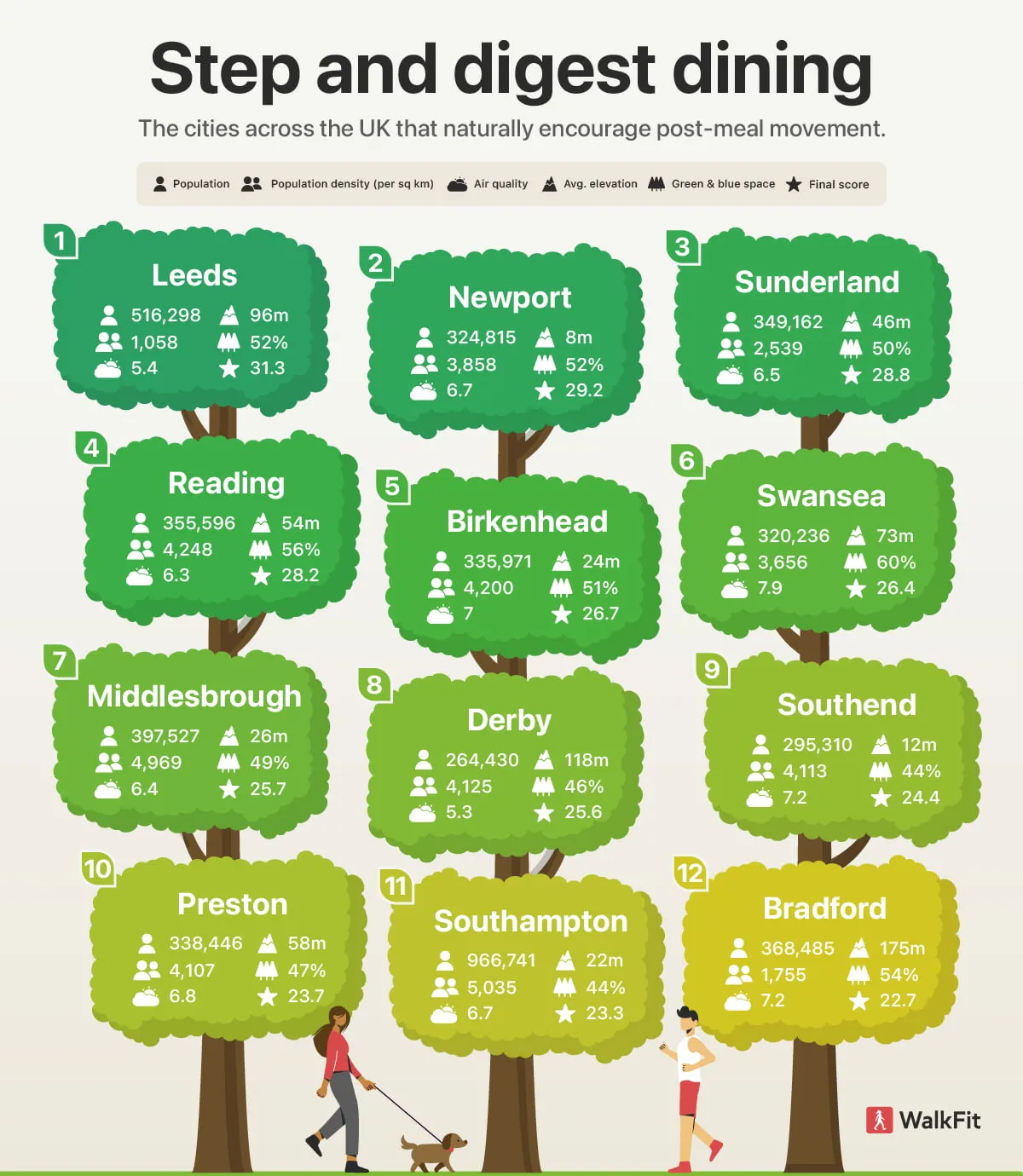
At the top of our list is Leeds, Newport, and Sunderland, cities that are home to walk-friendly terrain, open space, and environmental conditions, all of which help set the stage for gentle digestion.
Leeds takes the crown thanks to a combination of lower population density, plentiful green and blue spaces, and good air quality. It's no surprise as to why, the city's green infrastructure is standout thanks to Roundhay Park, one of the largest urban parks in Europe, along with numerous other parks and canal paths which provide miles of flat walking routes.
Newport, in South Wales, ranks second, thanks to its elevation and abundant green and blue spaces. Areas such as Belle Vue Park, Tredegar House Country Park, and the nearby Newport Wetlands offer calm, nature‑rich surroundings ideal for gentle post‑meal strolls. The city also ranks high for good air quality, meaning cleaner air to breathe during a walk.
In third place is the coastal city of Sunderland, which ranks highly thanks to its clean air and abundant outdoor spaces. Popular coastal paths and country parks, including Penshaw Country Park, provide flat, peaceful walking routes that make it easier for the body to digest meals comfortably.
Cities lower down the list, such as Preston, Southampton, and Bradford, tend to have higher population density, less connected green space, or lower air quality, making calm post-meal walks harder to find.
It's one thing to know that gentle movement after a meal can support digestion, but knowing how and when to do it makes all the difference. A post-meal stroll helps your body move food more efficiently and reduces bloating. Timing, pace, posture, and environment all play a role in making this simple routine effective and enjoyable.
Here is the ultimate post-meal stroll, according to expert guidance from Deborah:
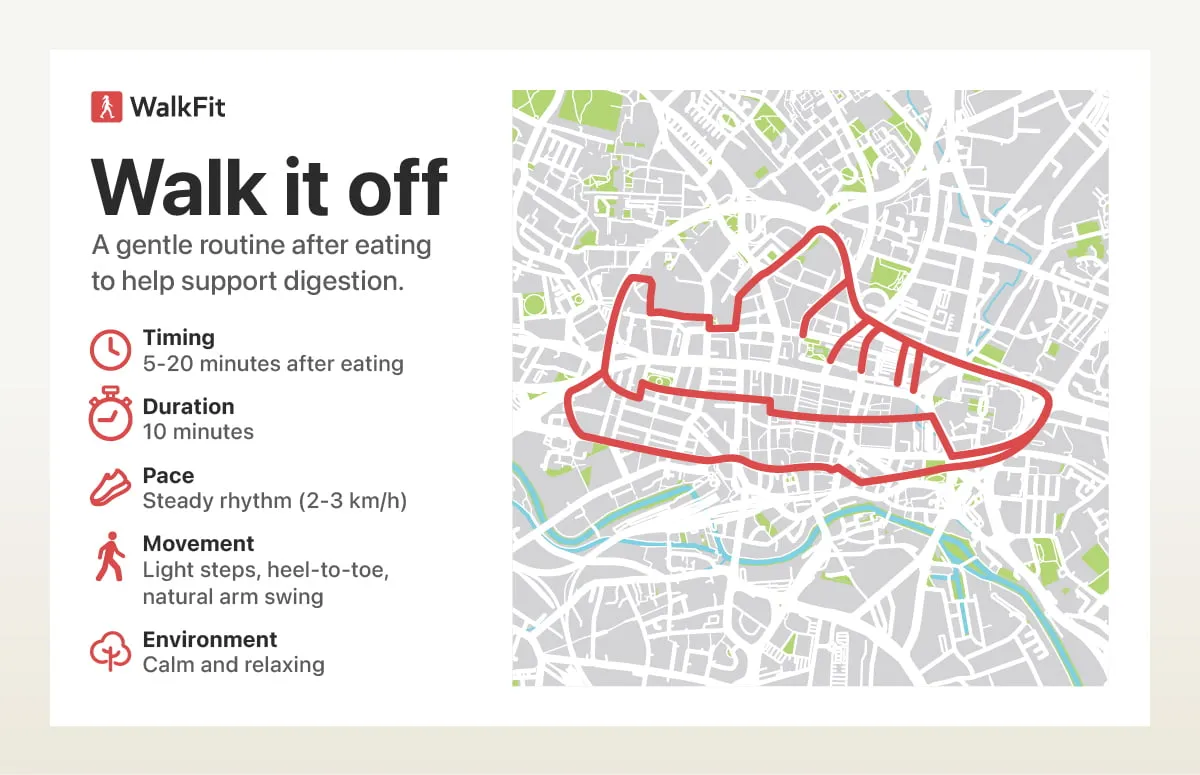
When to start: "5–20 minutes after finishing your meal. This gives your body a short window to begin initial digestion before gentle movement helps food travel smoothly through your digestive tract."
Duration: "10 minutes is ideal. This is enough time to support digestion without overexerting yourself. You can extend it to 15 minutes if you feel comfortable."
Pace: "Keep it easy and relaxed, around 2–3 km/h. You should be able to hold a conversation comfortably. Focus on nose breathing to maintain a steady rhythm and oxygen flow."
Movement: "Step heel-to-toe with a gentle, natural arm swing. Avoid sudden speed changes; the goal is light, effortless movement that supports your body rather than challenges it."
Environment: "Opt for a calm, relaxing environment, where possible. Quiet streets, parks, coastal paths, or any green or blue space reduces stress and helps your nervous system guide your body into digestive mode."
"Next time you finish a meal, step outside or find a calm space and try a short stroll. Even just 10 minutes can help your digestion, ease bloating, and leave you feeling lighter, more energised, and ready for the rest of your day."
Sources:
[1]
Guts Charity
[2] Frontiers
Methodology:
This study analysed the 30 most populated cities across the UK to determine
which locations best support digestive health and post-meal movement. Each city was scored on five gut-friendly
environmental metrics including: crowd density, average elevation levels, air quality, green space, and blue space.
All variables were weighted and aggregated into an overall score. The final ranking highlights the cities where
the built environment makes it easier for residents to maintain a healthy, digestive lifestyle beyond what they
eat. The sources used for the four categories were as follows:
People worldwide choose WalkFit to get the most out of walking for their health and fitness. See what they have to say about their journey with WalkFit.