

Motivating and easy-to-follow app. I like it 🙂
★★★★★
Stop counting every step. Start catching your breath.
The question of how many steps we should take each day has sparked endless debate. For years, the focus has been on the familiar 10,000-step target. But when it comes to walking and long-term health, one crucial detail often gets overlooked: pace.
Walking faster isn't just about getting from A to B sooner. It's about making each step work harder for you. A brisker pace has been shown to improve cardiovascular health, ease stress, and strengthen bones and muscles. In other words, how quickly we move may be just as important as how far.
At the same time, longevity has become the ultimate wellness buzzword. From saunas to elaborate skincare routines, people are constantly searching for the secret to living longer, healthier lives. The challenge? Many of these habits are complicated, time-consuming, and difficult to sustain.
Sometimes, the simplest habits are also the most effective, and walking faster is one of them.
Subtle changes in how you walk can have meaningful effects on your health. Tetiana Tereschenko, a sports medicine doctor, explains why speed might be more important than distance, and exactly what happens to the body when you pick up the pace.
"Walking faster leads to a greater physiological response. When walking at about 3-4 mph, energy consumption increases compared to walking at a leisurely pace due to increased muscle activity in the lower extremities and changes in stride length. As pace increases, more muscles are recruited, placing greater demand on the heart and lungs."
These changes help explain why brisk walking is often linked with stronger cardiovascular health:
Tetiana continues: "We know that 10,000 daily steps can often feel unreachable for most people, but research shows that this target isn't necessarily the only path to better health. In fact, studies suggest[1] that mortality risk already begins to decline when simply increasing daily steps from 4,400 to 7,500.
"Faster walking increases the body's physiological response and has a training effect, meaning that a shorter brisk walk can deliver more benefits than a longer but slower one."
The connection between brisk walking and longevity
Beyond day-to-day health benefits, walking speed has also emerged as a strong indicator of long-term health, with researchers increasingly using walking pace as a marker of overall physical condition.
"Studies have shown that increasing walking pace is associated with a lower risk of all-cause and cardiovascular mortality. Faster walking typically reflects stronger cardiovascular fitness and better metabolic health, both of which are linked to longevity."
Large-scale research also supports this connection. A study of more than 400,000 UK adults by the University of Leicester found that as little as 10 minutes of brisk walking a day can be linked to longer life expectancy, with brisk walkers having up to 20 years' greater life expectancy compared to those who go through life at a slower pace [2] .
These findings show that pace can matter more than distance, and that speeding up your morning commute could help you add years to your life.
If brisk walking is linked to better long-term health, the natural question becomes: what should people actually aim for? Walking coach, Ludgina Dieujuste, says it doesn't require long workouts or extreme step targets. In many cases, a small increase in pace is enough to make walking a lot more beneficial.
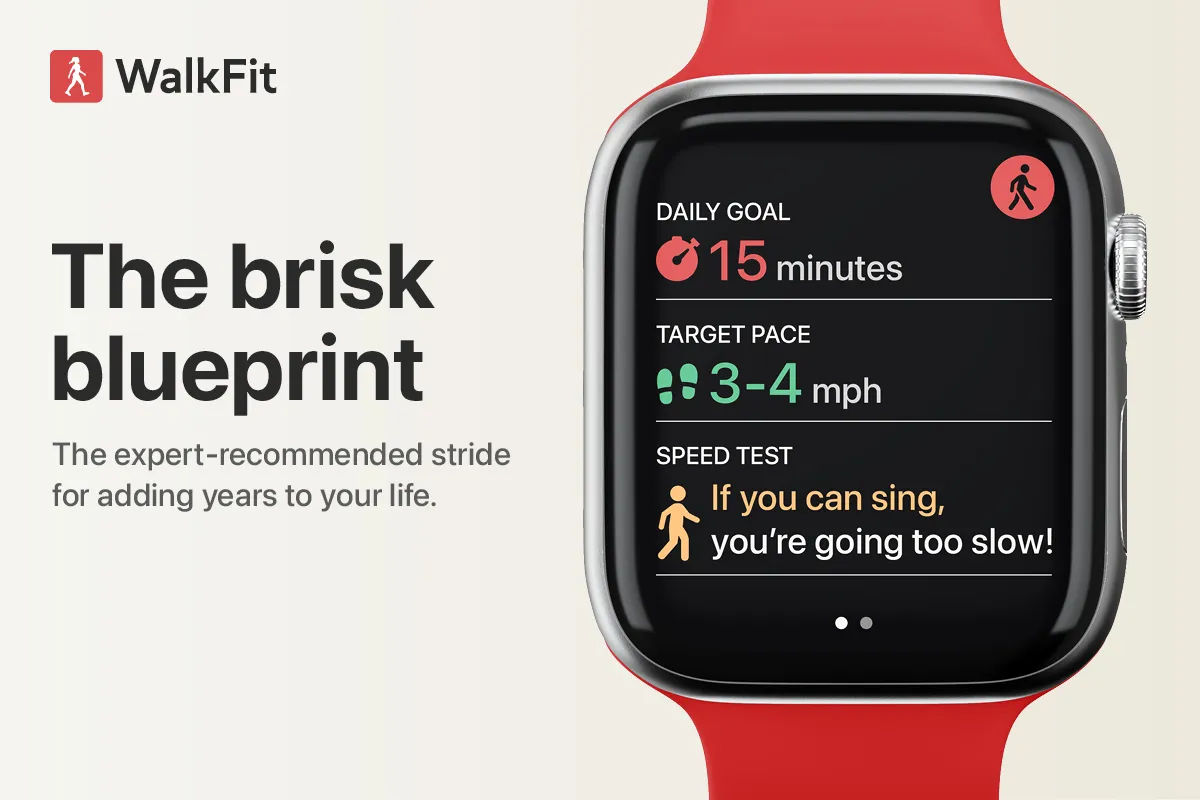
"To see the benefits of brisk walking, keep it simple: around 15 minutes a day at around 3-4 miles per hour. One of the biggest mistakes beginners make when trying to walk faster is doing too much too soon. Doubling your pace immediately can lead to fatigue or aches that discourage continued walking. It's better to start gradually and progressively pick up your pace until you reach your desired speed.
"Technique matters too. Your arms are like the engine that drives your walking rhythm, so when you swing your arms slightly faster, your legs naturally follow. Another common mistake is overstriding, reaching the foot too far in front of the body. This actually creates a braking effect with each step that wastes energy. Efficient walkers take shorter, quicker steps that land closer under the body, maintaining momentum and reducing strain."
Walking becomes easier to maintain when it doesn't feel like a chore. Building some sort of accountability, such as walking with a friend, joining a challenge, or using a walking app, can help keep motivation high. Small personal goals, like walking faster up a specific street or shaving a minute off your usual route to work, can also make the habit feel more engaging over time.
When it comes to walking briskly, your environment can affect your pace as much as your shoes or arm swing. Urban layout, street design, and how busy an area is all influence whether it's easy to maintain a steady pace or whether you're constantly slowing down, stopping, or navigating around obstacles.
According to Ludgina, areas with long, uninterrupted pathways like parks or waterfronts help people maintain a steady rhythm. Urban spaces with fewer crossings, lower congestion, and flatter terrain also make brisk walking easier.
Using these factors, we analysed population density, average gradient, and navigability score - a metric that measures the amount of crossings, how direct and straight walking routes are, as well as how busy and crowded streets are across the 30 most populated cities in the UK - to reveal the best and worst cities in the UK for those wanting to walk quicker.
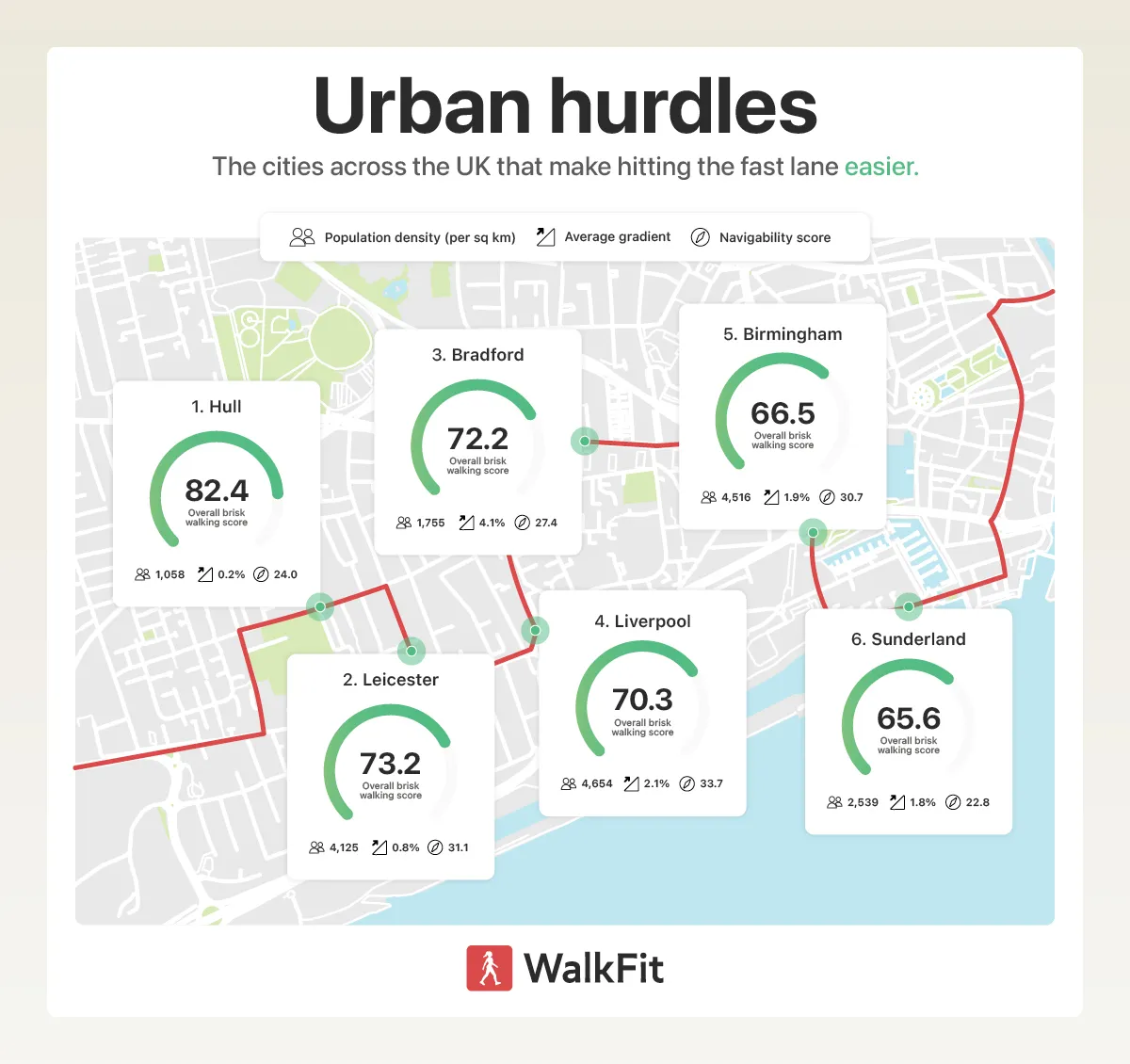
Cities such as Hull and Leicester rank among the easiest places to pick up the pace. Hull's relatively flat layout and open city centre spaces, such as the marina, provide open walkways where pedestrians can move without constantly navigating crowds. In Leicester, quieter pedestrian routes such as New Walk offer long, straight paths that make it easier to keep up with a consistent rhythm.
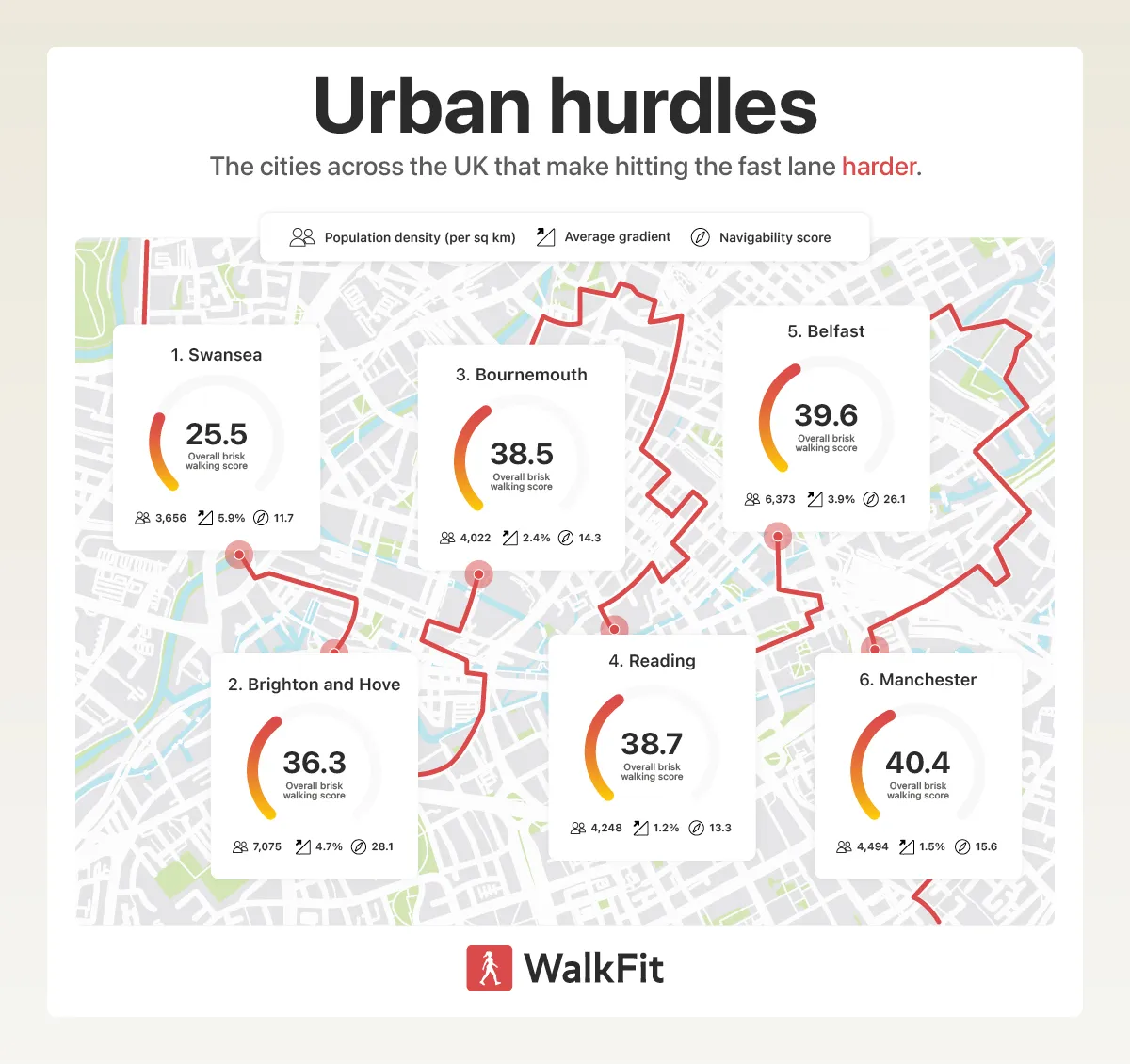
At the other end of the scale, some cities are much harder to move through quickly. In Manchester, for example, central retail areas such as Market Street are often packed with shoppers, street performers, and commuters, making it difficult to keep up a brisk pace.
Similarly, Brighton and Hove sees heavy foot traffic in popular areas like North Lane, where narrow streets and shops draw large crowds, sometimes making walking impossible altogether.
Tetiana says, "Living in busy areas might make fast walking harder, but it's not impossible. There are a few simple adjustments you can make to pick up your pace.
"Even the busiest of areas will have clear sections. Use them for brief bursts of faster walking rather than trying to maintain a quick pace the entire time. Timing your walks during quieter periods can also help you avoid crowds and move freely."
As with any new exercise, trying to push too hard too quickly can increase the risk of injury. That's why experts recommend gradually building up your walking intensity, focusing on technique and posture rather than simply trying to move as fast as possible.
Ludgina explains: "Walking posture plays a significant role in speed, efficiency, and safety. Stand tall with your chest open and shoulders relaxed, keep your health upright and eyes forward, engage your core, and let your arms swing naturally at about a 90-degree bend. When posture is aligned correctly, walkers move more efficiently, with less strain on the joints and muscles."
For those with joint issues or past injuries, increasing pace safely may require a little extra preparation.
Tetiana advises: "To safely increase walking speed if you suffer from joint problems or after injuries, it's important to perform exercises aimed at strengthening muscles and improving joint mobility and coordination. Focus on areas such as the glutes, quadriceps, hamstrings, and calf muscles, which all play a major role in walking mechanics.
"It's also important to ensure you have a good range of motion in the ankle, knee, and hip joints for faster and safer walking. Stretching and mobility exercises can help improve this and reduce the risk of strain."
Ultimately, picking up the pace doesn't mean pushing yourself to exhaustion. By improving posture, strengthening key muscles, and gradually building speed, brisk walking can become a simple, sustainable way to boost your daily movement. So, next time you head out for a walk, try increasing your pace a little and see how it feels.
Methodology and sources
This study compared cities based on how supportive they are for brisk walking, focusing on environmental and structural factors that influence how easily someone can maintain a fast and uninterrupted walking pace.
Three core factors were used to calculate the brisk walking score: population density (40%), navigability (40%) and average gradient (20%).
Average gradient measures how steep a city's streets are, based on elevation data across the network. Steeper terrain requires more effort and slows walking speed, while flatter areas make it easier to maintain a brisk pace.
Population density reflects how many people live in a given area. While density can support walkability, very high levels often lead to crowded pavements, congestion, and more frequent stops, which can disrupt walking rhythm and reduce speed.
Navigability measures how easily pedestrians can move through a city without unnecessary detours or interruptions. It combines factors such as route directness, street layout, crossings, and overall busyness.
The final score brings these metrics together using standardisation and weighted importance. Cities that are flatter, less crowded, and easier to navigate tend to support faster, more consistent walking speeds.
Sources


People worldwide choose WalkFit to get the most out of walking for their health and fitness. See what they have to say about their journey with WalkFit.