

Motivating and easy-to-follow app. I like it 🙂
★★★★★
Consistent walkers aren't necessarily doing more. They're finding simple ways to make walking easier to repeat.

We track our steps, but how many of us monitor the habits that make them happen?
When it comes to exercise, we're often told that consistency comes down to motivation, discipline, and willpower. But for many people, the hardest part isn't knowing they should move more; it's making movement fit into everyday life.
To find out the secret behind making walking part of a routine, we analysed data from thousands of WalkFit users to uncover the behavioural patterns shared by people who walk consistently.
By looking at when, how often, how long, and how people walk, we identified a series of small, repeatable behaviours that point towards a 'consistency formula' – a practical path of least resistance for making walking part of everyday life.
Walking is one of the most accessible and popular ways to stay active, with 76% of UK adults saying that they walk as their main form of exercise[1].
But while walking is easy for many adults to begin, research shows that following walking programmes can decline over time[2].
So, how can walking become a routine? The answer isn't necessarily about walking more, but instead, making it easier to repeat.
We analysed the behaviours of WalkFit users who had completed at least three walks per week for 12 consecutive weeks. This exceeds the average 66 days (around nine and a half weeks) it takes for a behaviour to become a habit[3], giving us a sustained period of walking behaviour to examine.
So, what are consistent walkers actually doing?
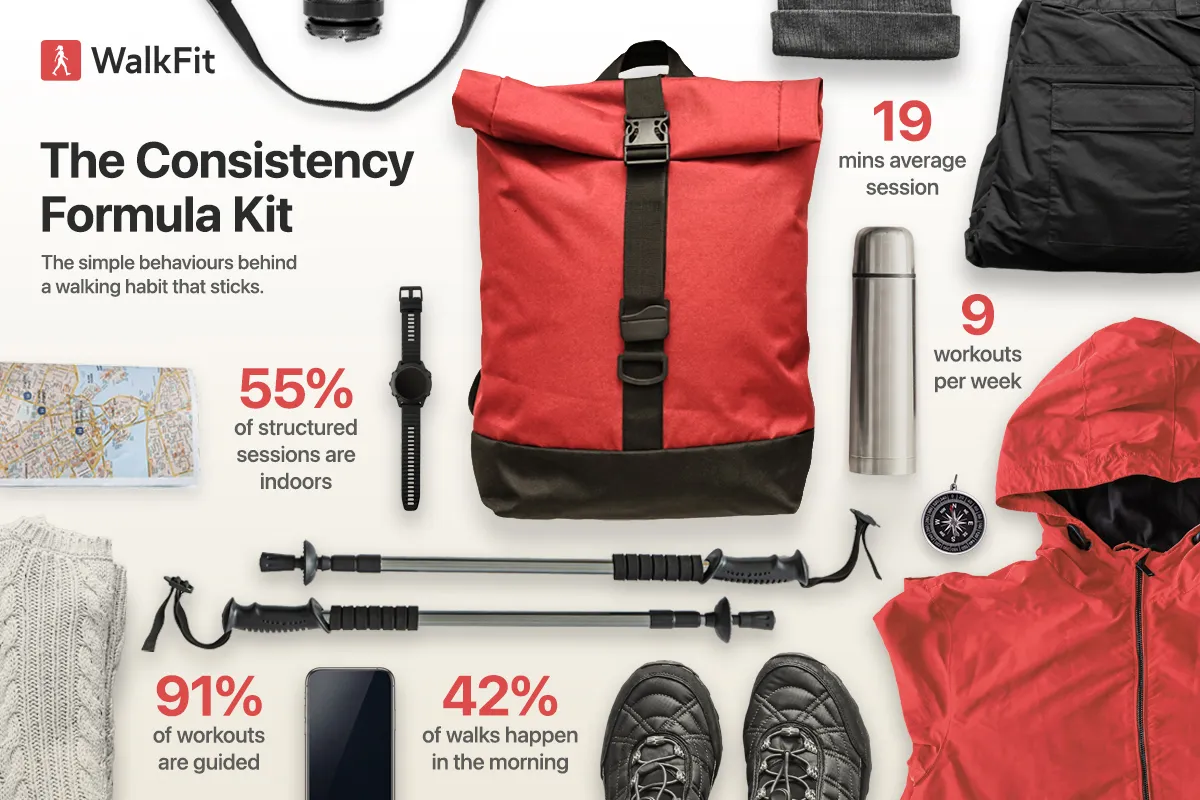
Together, these patterns reveal something important: the path to consistency isn't necessarily about doing more. It's about making walking easier to start, repeat, and return to.
The first barrier to regular exercise is often time. With work, family, and everyday commitments competing for our attention, finding time to exercise can be a challenge. In fact, research shows that up to 46% of Brits struggle to fit exercise into their daily schedules[4].
But our data suggests consistency doesn't necessarily have to come from finding one big block of time. With an average session of 19 minutes and around nine workouts per week, we found that consistent walkers are fitting movement into their routines more frequently. As walking coach Ludgina Dieujuste explains:
"One of the keys to staying consistent with movement is making it realistic. For many people, shorter walks throughout the day are simply easier to fit into real life than trying to find one uninterrupted hour to exercise."
Breaking movement into smaller moments can be much more effective than waiting for the perfect window.
"For example, taking a 10–15 minute walk after two or three meals may feel much more manageable than trying to schedule a 45 or 60-minute workout. Those shorter walks still add up.
"I always encourage people to create goals that work with their lives rather than against them. When something feels attainable, you're more likely to repeat it, and consistency is what ultimately builds the habit."
The takeaway: Don't wait for an hour to appear in your day. Start with the smaller opportunities that are already there, and build from what feels realistic.
Finding a few minutes is one thing. Remembering to use those minutes is another.
Almost half (42%) of consistent walkers completed their walks in the morning, the data points to something more useful than simply finding the "best" time to walk: giving walking a predictable place in your day.
Linking a new behaviour to something you already do regularly, otherwise known as habit stacking, means it requires less conscious decision-making. And research even suggests that connecting a new behaviour to an established routine can help it become more automatic[5].
So, rather than creating a completely new behaviour, attach walking to something that already happens every day: after your morning coffee, following breakfast, after the school run, at lunchtime, or when you finish work. As Dr Cassidy Jenkins, PhD, explains:
"When we repeatedly connect walking with the same time or routine, we start removing some of that decision-making. The goal is for walking to require less negotiation with yourself and begin to feel like a natural part of your day."
Even the best-designed routine will get disrupted. You'll miss a walk. Your schedule will change. The weather will turn. You'll have days when exercise simply isn't a priority.
The goal isn't to eliminate those moments. It's to make sure they don't become the end of the routine.
Our data shows that over half (55%) of structured sessions take place indoors, suggesting that consistent walkers aren't relying solely on outdoor conditions to get their workouts in.
As Ludgina explains: "If the weather changes or your schedule gets hectic, you don't have to abandon the habit; you simply change how you get your walking in. Make walking fit your life instead of waiting for life to perfectly fit your walking routine."
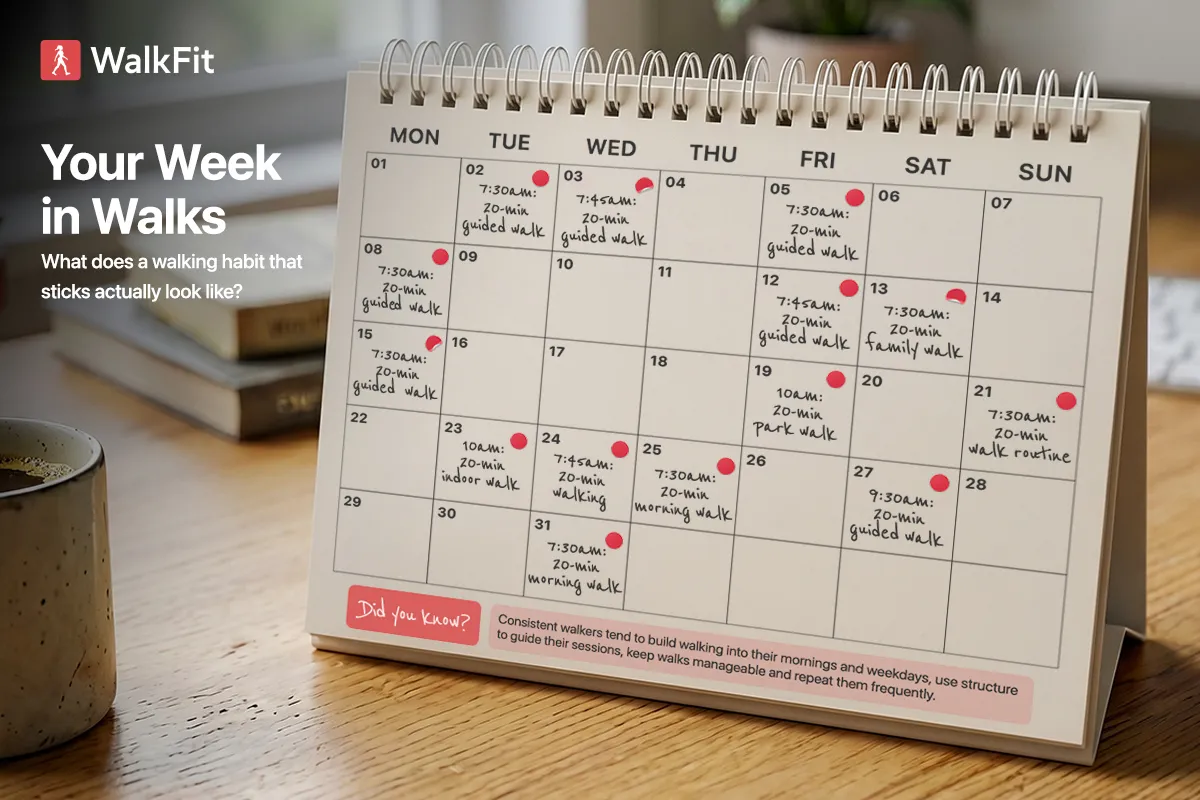
Our findings point to a simple consistency formula: keep it manageable, give it a place in your day, remove unnecessary decisions, and have a way to adapt when life gets in the way.
The aim isn't to create a perfect walking routine. It's to make the next walk easier to start, and easier to come back to.
Because the path to a lasting walking habit might not be about finding more motivation. It might simply be about removing more of the resistance.
This analysis looks at walking behaviours of thousands of WalkFit users worldwide who completed at least three walks per week for 12 consecutive weeks. The analysis covers 353,624 completed walks across the cohort. We examined when users walked, how frequently they exercised, average session length, and the types and settings of workouts they chose.
Sources
[1] YouGov
[2] PubMed
[3] Healthline
[4] Samsung
[5] Calm


People worldwide choose WalkFit to get the most out of walking for their health and fitness. See what they have to say about their journey with WalkFit.